
What if the biggest obstacles to easier movement aren't your age, arthritis, or an old injury?
In this episode, I share five surprisingly common habits that can quietly interfere with comfortable, coordinated movement for both people and animals.
You'll discover why slowing down helps your nervous...
Most of us have absorbed a story about aging, one that treats decline as a foregone conclusion, for ourselves and for our horses and dogs. But that story leaves out something important.
In this episode, Mary Debono makes a compelling case that how we age is far more within our influence than our cu...
What if your strong desire to help your dog is making it harder to help them?
It sounds counterintuitive, but when we become attached to a specific outcome, we often bring hidden effort, worry, and mental rigidity into the interaction.
And your dog feels all of it.
In this episode, I explore why ...
What if the starting point for real change wasn't finding what's wrong, but finding what's already right?
In this episode, Mary Debono reflects on a critique of self-help culture by author Tim Ferriss, who observed that to continually improve yourself, you must continually locate the ways you ar...
There's an important distinction in movement education between effort and strain, and understanding it can change how you think about your own body and your horse or dog's soundness.
In this episode, Mary Debono breaks down what healthy effort looks like: energy directed toward what you want to ach...

We've all heard "practice makes perfect." But what if repeating the same movement is actually making things worse?
In this episode, Mary unpacks one of the most important distinctions in nervous system-based movement work: the difference between repetition and refinement. While repetition strengthe...
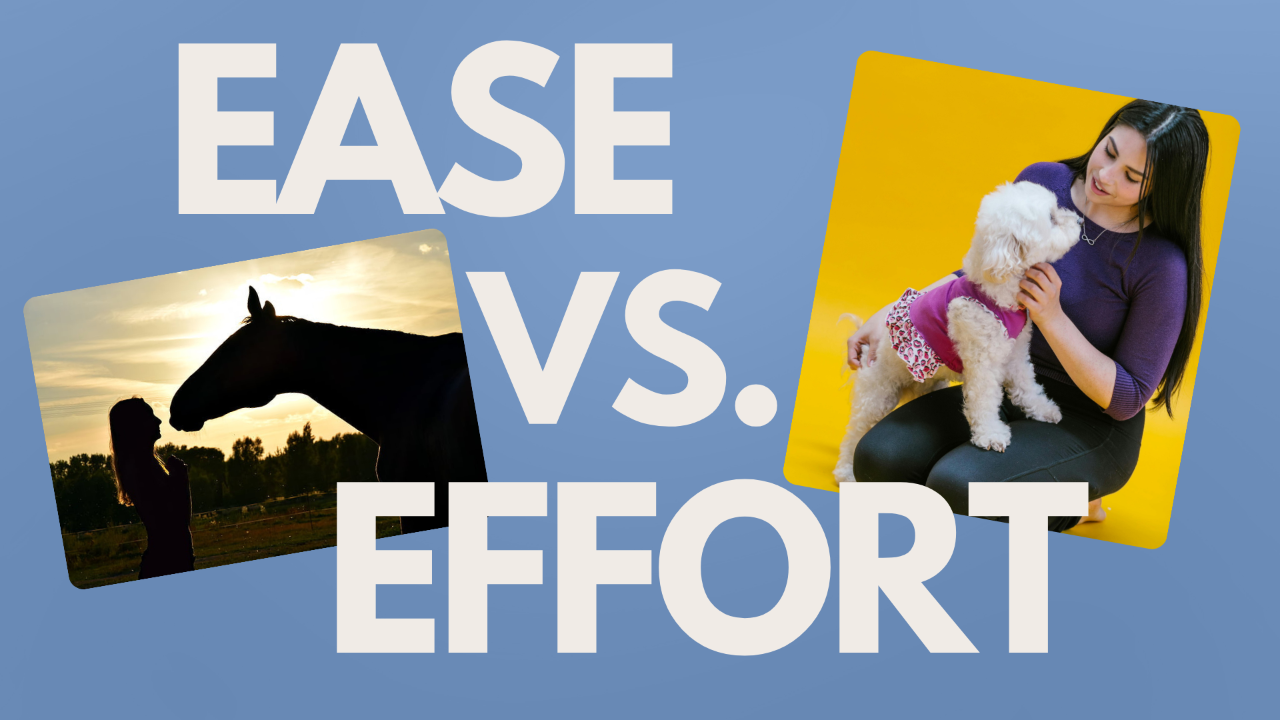
Before you ever place a hand on your horse or dog, an exchange is already happening. Your animal is noticing how you breathe, how you move, and where you direct your attention. Their nervous systems are constantly gathering information, and one of the strongest sources is you.
In this episode, we e...
Whether you’re helping a senior or injured dog regain mobility, encouraging your horse to move more freely, or looking to ease discomfort in your own body, real, lasting improvement begins with curiosity, comfort, and a sense of safety—not with pressure or force.
What if your horse or dog could imp...
Movement expert Mary Debono reveals why traditional "fixing" approaches often backfire and create resistance in both animals and humans. Drawing from the Feldenkrais Method® and her innovative Debono Moves approach, Mary explains how supporting the direction of ease—rather than opposing it—builds tr...
