
Unnecessary Tension and How It Affects Your Horse or Dog #141
Feb 13, 2026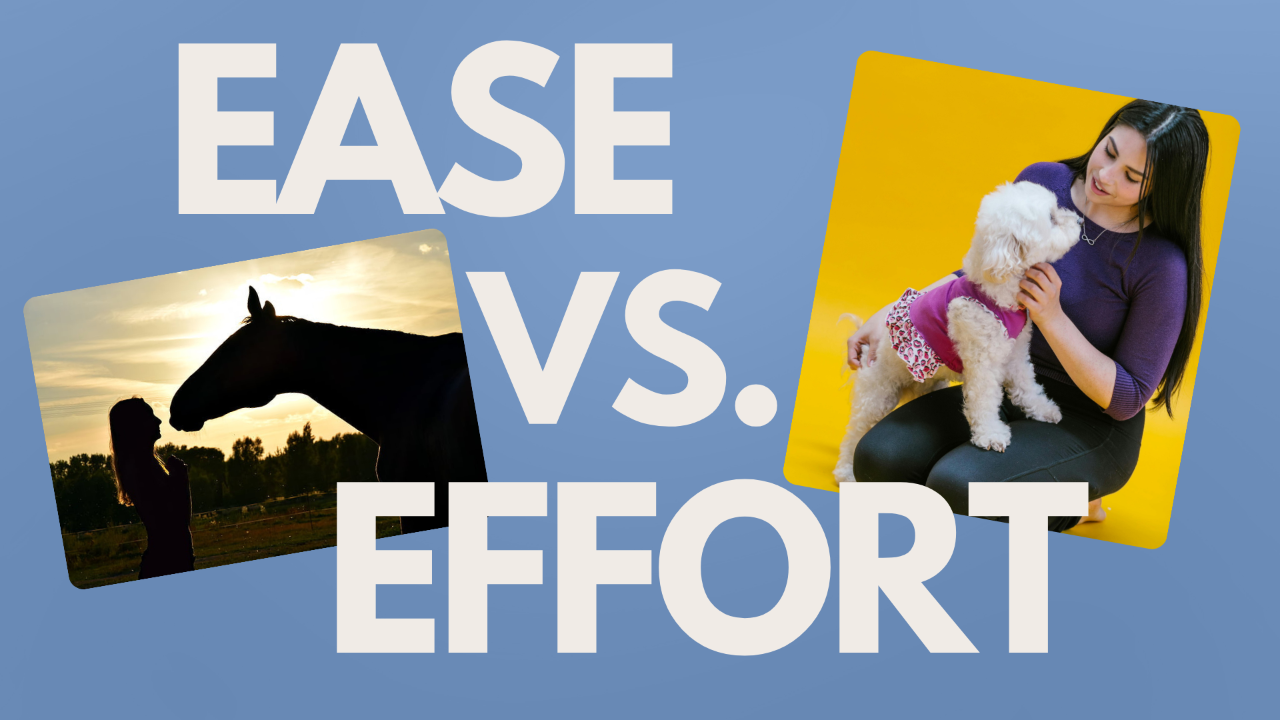
Before you ever place a hand on your horse or dog, an exchange is already happening. Your animal is noticing how you breathe, how you move, and where you direct your attention. Their nervous systems are constantly gathering information, and one of the strongest sources is you.
In this episode, we explore why the quality of interaction often matters more than the action itself. Two people can perform seemingly identical hands-on work and get completely different responses because of how they're being in that moment.
We'll discuss common patterns like holding your breath, moving in rushed ways, or concentrating so intensely that you create urgency that your animal picks up on. The good news? Small shifts (relaxing your lower back, softening your hands, releasing your shoulders) can immediately transform how your animal responds. You'll also learn about compassionate curiosity: approaching your animal with genuine interest rather than goal-driven intensity.
KEY TAKEAWAYS
Your animal reads you before you touch them. Horses and dogs notice your breath, movement, and attention before any hands-on work or training begins. Their nervous systems constantly gather information, and you are one of the strongest sources.
The quality of interaction shapes the outcome. Two people doing identical work can get completely different responses. What often matters most isn't what you're doing, but how you're being while you do it.
Ease versus effort affects everything Ease has clarity without force and presence without pressure. Unnecessary effort creates tension that makes you less coordinated and signals urgency to your animal, even when your intentions are kind.
Tension isn't just physical. Mental and emotional effort—like concentrating intensely on getting something right—can feel forced and performative to your animal, creating disconnection rather than the connection you're seeking.
Small shifts create immediate changes. Simple adjustments like softening your breath, relaxing your shoulders, or settling your weight into your bones can completely transform how your animal receives your work with them.
Compassionate curiosity supports connection. Moving from goal-driven intensity to genuine curiosity—observing without judgment—changes your internal state and often produces immediate shifts in your animal's response.
Self-awareness develops over time. Recognizing and releasing unnecessary effort requires specific tools and practice. The Feldenkrais Method develops this awareness, helping you better connect with yourself so you can better help your animal.
You don't need to be perfect. Everyone carries unnecessary tension. What matters is gently catching yourself and returning to a sense of ease, both for your benefit and your animal's.
To release tension for better connection with your animal and improved well-being for yourself, check out the resources listed below.
Resources:
💥Learn how the Feldenkrais MethodⓇ can help improve your seat, position, and balance on your horse! Free rider videos masterclass: https://www.marydebono.com/rider 💥
Free FeldenkraisⓇ videos suitable for both equestrians and dog lovers. (No opt-in required.) https://freeclasses0723.movewithyourhorse.com
Effortless, Balanced Sitting Series: Whether you're a rider seeking a balanced, secure seat on your horse, someone who spends long hours at a desk, or simply want to move through life with more ease, this innovative FeldenkraisⓇ program will help you discover a more comfortable, balanced way of sitting.
Grab your FREE video training to help your dog. 🐕 https://www.marydebono.com/lovedog 💥
Get Mary’s bestselling, award-winning book, “Grow Young with Your Dog,” for a super low price at: https://tinyurl.com/growyoungwithyourdog. Demonstration videos are included at no extra cost. ⬅️⬅️⬅️
All information is for general educational purposes ONLY and doesn't constitute medical or veterinary advice or professional training advice. Please consult a qualified healthcare provider if you, your horse, or your dog are unwell or injured. Always use extreme caution when interacting with horses and dogs.
About the Host:
Mary Debono is a pioneer in animal and human wellness, blending her expertise as an international clinician, best-selling author, and certified Feldenkrais Method® practitioner. With over three decades of experience, Mary developed Debono Moves, a groundbreaking approach that enhances the performance, well-being, and partnership of animals and their humans.
Mary's innovative approach draws from the Feldenkrais Method®, tailored specifically for horse and dog enthusiasts. Her methods have helped animals and humans:
- Improve athletic ability and performance
- Enhance confidence and reduce anxiety
- Reduce physical limitations and discomfort
- Deepen the human-animal bond
Mary's flagship online programs, "Move with Your Horse" and "Easier Movement, Happier Dogs," provide animal enthusiasts with an innovative approach that combines the concepts of Feldenkrais® with her signature hands-on work for horses and dogs (Debono Moves). Through this transformative approach, both people and their animal companions discover greater harmony, ease, and connection.
#Feldenkrais Method #Debono Moves #horses #dogs
TRANSCRIPT:
Hello. Before you touch your animal, before you ask for anything, before you try to help in any way, there's something already happening. Your animal is noticing the way you breathe. They're noticing the way you move and the way you direct your attention. So long before any technique comes into play, there's an exchange taking place, one that's shaped by your underlying sense of either ease or effort. And whether we realize it or not, that internal state has a direct impact on how you and your animal experience each other.
Horses and dogs are extraordinarily sensitive to rhythm, pressure, timing and tone. Their nervous systems are constantly gathering information. And one of the strongest sources of information is you. Your breath sets a rhythm. It tells the animal a lot about how you're relating to your environment and your movement. Your sense of tension or lack thereof is an important indicator for your horse or dog. And the way you're directing your attention, what you're paying attention to, communicate safety or urgency.
So even when you're doing nothing, something is being felt and processed by your animal. And here's the thing, many people focus on what they're doing with their animal. Like in relation to my work, Jabono moves, they might be very focused on getting, getting the hands on work, quote, unquote, right. Or, you know, in horsemanship or dog training. Right. They're very interested in, you know, how exactly do they cue their animal.
You know, the training, the exercise and all of that is really important. But what often matters even more is how you're doing it. So this is. I cannot emphasize this enough. It's like what you bring to the exchange, what you bring to the relationship at any given day is so important. You know, maybe you find that you're holding your breath without realizing it, or your movements are rushed or braced, or maybe your attention is really scattered and this is really important to remember.
It's not that we're all perfect. We're not. You know, I don't think you want to even meet a person who's perfect. Right. They would be probably pretty difficult to be around, but we catch ourselves. In other words, maybe when you're working with your horse or your dog, you realize, oh, maybe I can let go of that tension around my shoulders or around my jaw, or maybe I can just gently bring my attention back to my animal, to noticing how they feel or, you know, watching what they're doing instead of worrying about something that, you know, you need to do tomorrow for work or worrying that you're getting something wrong in what you're doing with your animal.
Because your horse, your dog will feel those things immediately. And there's a very big difference. This is what your animal will feel, the difference between your sense of either ease or effort. And we have to remember ease is not laziness and effort is not strength. Unnecessary effort just means unnecessary tension, which means you're actually less coordinated, less optimized. You're actually weaker when you have unnecessary effort in your body.
And I want to also say effort is not just physical, it's emotional, it's mental too. You know, a lot of times we'll, you know, we just want to try so hard to do right by our animals and that is so, you know, worthy that, that is so virtuous. We want that in a way, we want to be our best self. But sometimes it comes at the cost of our own sense of ease.
You know, maybe we're just concentrating so intensely that we want a certain result that can feel very forced, rushed, and, you know, performative to our animal. In other words, there's, there's a lack of connection when you have yourself in that state. Right. So it can carry this sense of urgency. Right. So even when your intentions are kind, it may, your animal, your dog or your horse may actually feel uneasy about it.
Right. They might feel a bit unsafe or, you know, pushed into something. But ease, on the other hand, a sense of ease where you're at peace and, you know, you're human, you're working things out, you're, you're, you know, becoming more and more self aware. Ease has a clarity without force, it has presence without pressure. And so yes, your dog or your horse will respond very differently to those two states.
So, you know, I see this all the time in my work, teaching people to do hands on work with their animals. Two people will be doing the same exact thing and they'll get a completely different response. Now, of course, every animal is different, so that's a big, you know, variable right there. But sometimes if a person is not getting the results that they were they had hoped for, I might give them just a tiny little coaching cue like relax your lower back or smile or, you know, soften your hands a little bit or let your shoulders relax.
And then the way the animal receives it completely changes. So suddenly the animal gets more relaxed because they sense now that that unnecessary effort is gone. So I see this all the time, you know, so again, if someone is just like internally braced, maybe they always have, you know, a habit of contracting their abdominals unnecessarily or again, their shoulders, their back around their hips, it could be anywhere, right?
And that affects everything. Maybe their breathing is shallow and maybe their attention is fixed on getting it right. And you may find that the animal's like, I'm not really into this right now. So just, you know, if just the casual person was looking at them, they, they wouldn't see necessarily anything wrong. But the horse or the dog is responding to the quality of the interaction. But now just say that same person, they just take a breath, they pause.
I think, let me just soften my breath, let me just let my weight settle into my bones, right? Let me let go of unnecessary tension. That person gets more curious and less goal driven, right? They just become curious, why is my horse or my dog reacting like this? Or what am I feeling? Not like in an alarmed way like, oh, what does this feel like? Is this bad or good?
But it's like, oh, this is curious. That totally changes your state when you come from that, you know, that perspective of you're curious. It's actually what I like to call compassionate curiosity. Because it's curiosity without any judgment behind it. You're just like, oh, this is interesting. And often the animal on the receiving end changes immediately, right? They might take a deeper breath, they might go into a more relaxed posture.
They kind of settle into it. So, you know, this again, this is something that in my programs, both for the equestrians as well as the dog lovers, we pay a lot of attention to the person's movement and well being and how easily they can connect with themselves and really develop this self awareness, knowing how to let go of unnecessary tension so they can better connect with their animal and then better help their animal.
So this is something that's very practical and very compassionate for both you and your animal. You know, and I again, I want to emphasize, you don't need to be perfect. We all catch ourselves doing these things, but it's like just gently bringing ourselves back to a place of letting go. And the other thing is, this is why I love the Feldenkrais method so much and it's such an integral part of my horse and dog programs is that you develop self awareness over time.
In other words, I could just say to you, let go of unnecessary effort. If you don't have the tools like the Feldenkrais method, that's very difficult to do. You don't know what you don't know. You don't know how to let go of unnecessary effort to even sense that you're doing something unnecessarily. So again, this is why it's a very big part of my work and I encourage you to to seek out resources I have.
You know, I offer both paid and free resources that for the Feldenkrais method. I'll have them in the show notes, the free ones. So you're welcome to look at that. But and again, the more you do it, the more you will refine your ability to really be present with your animal, to let go of unnecessary attention and for you to reap the benefits as well, that you'll feel better in body and mind, you'll move more freely, you can do more fun things with your animals and help them more effectively.
So just always remember your animal isn't just responding to what you do, but they're responding to who you're being in that moment. So let's do the best we can at being the best versions of ourselves for ourselves and our animals. And thank you so much for being here. Remember to check out the show notes for resources that you might want to look into to improve your self awareness and help your animals as well.
Thank you so much and I'll talk to you soon. Bye for now.
